
An Ode to Experience Design
Calling it Product Design is an understatement, and shifts focus away from what truly matters
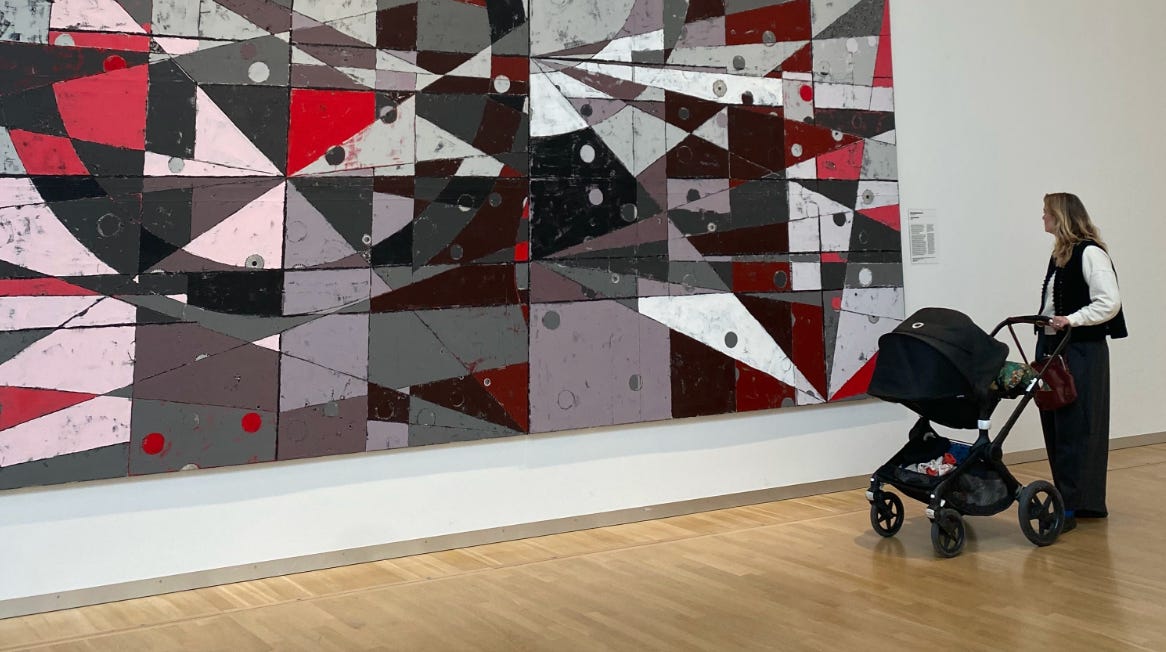
There’s been a rather quiet shift in the field of design — what used to be titled User Experience Design is now mostly referred to as Product Design. I believe experience is at the core of design. I want to put it back in the name.
Here’s why.
Everyone has art on the wall
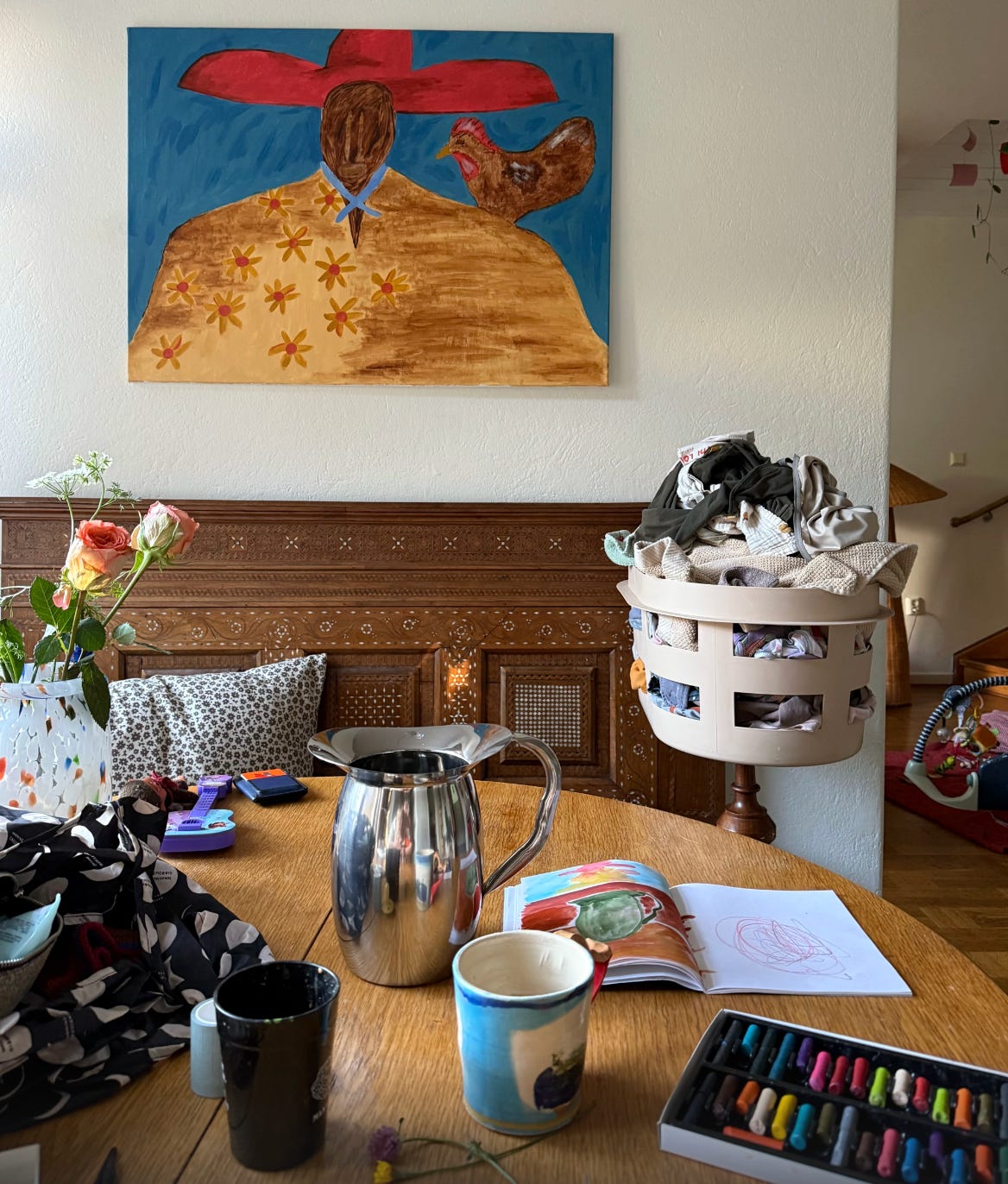
It may be an oversized sepia photograph of the ocean purchased at Ikea or a mediocre oil painting inherited from an aunt. It may be abstract or quite specific. It may complement its surroundings or look careless in the grander scheme of a room. But I am certain: there is something on your wall. There always is. It’s one of humanity’s most ancient understandings — if there is a wall, I must put something on it.
I love that.
Humans crave beauty. No matter which class or culture, we are drawn to colors, light, texture. We enjoy the feel of certain materials. Scents can evoke distant memories, and the right song at the right time may change us forever.
What exactly we like is personal. Your choice of art, books, cutlery, clothes is intimate. You may not put much thought into it, but what you choose to show off has power: It can send a message. I make things. I am rich. It can be a statement. I’m a rebel. I believe. I don’t care. It can show a preference. I’m a minimalist. I like color. It can ask a question. Who do you think I am? Does this make you uncomfortable? Is this who you thought I was?
What you put up, wear, and use answers without having to ask. It solves mysteries and summons new ones. Because more than beauty, we crave connection. Expressing ourselves in various ways, consciously and unconsciously.
It’s beautiful.
There is no shame in beauty
There’s something I have noticed.
Some people feel uncomfortable showing off what they like. I think they are afraid of being thought of as superficial, as being seen as someone who cares “too much” about aesthetics.
I used to feel like that.
I’m drawn to handmade things. My taste tends to go against most trends, which in a capitalist society means: expensive (lower demand, less supply). I remember a friend asking me where I had purchased an antique shelf. I was ashamed to admit that I had won it at an auction for an (what-I’m-sure-my-friend-felt-like) embarrassing amount of money.
But there is no shame in liking something. We all see beauty in different things. Our taste is one of the things that colors who we are — like our culture, language, and relationships.
I’ve learned to see an acquired taste as a sign of a free spirit—someone who doesn’t blindly follow trends or makes much of an effort to appear cultured. They simply know what they like.
You thought about that. You looked at countless things and found this one to be your favorite. That’s what you put up on your wall. One of the great mysteries of your being, laid bare.
What makes good design
I work in design. There’s a lot of talk about what makes a good designer. Many agree: it’s about a strong sense of taste. It’s about having a point of view.
It is.
And yet, most designers do not feel like their sense of taste is allowed to drive their design work. We rarely discuss beauty. We discuss utility. But what is utility if it doesn’t enrich the human experience?
It lacks meaning.
I work in tech. There’s a never-ending race for the next big product launch. Something customers will appreciate. Something they’ll tell their friends about. Something that new customers will sign up for. But what have you ever told a friend if not a story? Even if you were to recommend a product, you’d do it in context. This helped me when that happened then. You give it meaning. The meaning is what makes your friend sign up.
It’s the art on your wall.
In the race for the next big sell, we invent problems worth solving. Even when we’re working on better solutions to known problems, we focus on filling them up to the brim with function. More is more.
It’s not.
I believe this is the most important job of a designer: to remind everyone in the room that it’s not just about how it works and what it can do, it’s about what it means. And that is so much harder to design. Only those who manage to convince their teams to linger and consider it, may get the opportunity to design something tasteful.
Designing meaning
Many have tried to write about how to design meaningful things. It starts with intention, of course. But what comes next?
Context. This one most design teams still get right. They consider who something is for and when they might use it. They think about scenarios and argue about hierarchies.
From here, things start to go off track fast. Design teams jump to conclusions about use cases and jobs to be done. They prototype and test half-baked experiences, and as soon as they get a positive signal, they go into execution mode. Product managers bring up costs. Things that aren’t needed are removed. Things that take longer to be perfected are labeled as costly and are moved to the backlog. Leadership encourages everyone to ship the industry-darling: the MVP — the minimum viable product.
It’s the bane of every creative’s fucking existence. The end of beauty, mystery, the archenemy of surprising potential.
Why? Here’s a secret.
The MVP that ships is often not actually the MVP at all. It’s the MDP. The minimum discussion product. The iteration most people can agree on. Not too ugly, designers have to be embarrassed. Not too pretty, it’s expensive. Not too useless, customers will be mad. Not too useful, we’d be undercharging.
If there’s still a goal left in my career in design, it’s this: to convince everyone that it’s worth moving beyond the MVPs and MDPs of this world.
Moving beyond
Because whenever it is done — when we build something better than the minimum — that’s when the magic happens.
Subtle hints that we’re sharing a human experience. That this was built by someone for someone. For you.
A millisecond of extra care in a transition. A word written that you haven’t read in a while, that makes you linger. A design tweak that isn’t just best practice but has the potential to redefine what “best” means. A wonky gradient. A font that isn’t Helvetica. A line of copy that sticks out.
Something that comes close to a real experience, makes you feel something, makes you wonder. It makes you raise an eyebrow (or two). It makes you snap out of it just long enough to connect with it and live a little.
There it is. The reason good design always wins and the reason you have art on your wall.
A reminder that you’re alive. That life exists outside of apps, products, objects. They’re all just decorative assistants to what we’re all doing, every moment of every day: breathing in and breathing out. Experiencing.
As designers, as artists, as builders and makers, as human beings, it’s our job to keep experiences sacred.
Putting more intention into how we design is where it begins.
Nicole is a Content Designer turned Design Director based in Stockholm, Sweden. She potters, writes poetry, and raises little girls in a house by a meadow. You can follow her writing here or get it directly to your inbox via her publication, eggwoman. Nicole is on Linkedin.